

In the 1960s, humanity bore witness to one of the most high-stakes rivalries in history: the Space
Race. This dramatic contest between the United States and the Soviet Union, fueled by
exponential pride, power, and the pursuit of progress, gave birth to some of the most defining
moments of our modern era.
The original Space Race not only changed our understanding of the universe but also redefined what humanity could achieve when ambition reached beyond the confines of Earth, with each achievement pushing the envelope for what was thought possible.
Yet, for all its triumphs, this era was deeply rooted in the geopolitical tensions of the Cold War,
making space as much a battleground for ideological supremacy as it was a frontier for scientific
discovery. Even as Neil Armstrong took his famous “giant leap for mankind” in July of 1969,
few at the time could have envisioned the scope and diversity of the space exploration efforts we
see today, where competition is no longer a zero-sum game but a complex web of collaboration,
innovation, and competition.
Today in the 21st Century, I firmly believe that we are witnessing a new “race,” but the rules
have evolved and players have changed.
The modern space race is fundamentally different from its Cold War predecessor. Where the first
race was a bilateral affair dominated by the United States and the Soviet Union, today’s race is a
multi-faceted and truly global endeavor. National space agencies such as NASA, Roscosmos,
and the European Space Agency (ESA) continue to play significant roles, but the rise of
emerging space powers like China, India, and even smaller nations has broadened the field.
Additionally, private companies such as SpaceX and Blue Origin have entered the fray,
redefining the parameters of space exploration. What was once purely a race driven by
governmental and geopolitical interests has now evolved into a sprawling competition and
collaboration between both public and private actors, fueled by diverse motivations—scientific
discovery, commercial profit, national pride, and even existential questions about humanity’s
survival, each pushing boundaries and redefining what it means to explore beyond the planet we
call home.
One of the most striking differences between the original Space Race and its contemporary
counterpart is the shift from pure competition to a more nuanced amalgamation of rivalry and
collaboration. The Cold War space race was steeped in a “winner takes all” mentality, with the
United States and the Soviet Union vying for complete dominance in space as a means of
proving their not only their ideological superiority, but also their technological might, even
though the actual achievements of each power were far less nuanced, as both sides achieved
great milestones that are certainly influential in mankind’s history.
In contrast, today’s space endeavors often involve multinational partnerships, exemplifying how shared goals can unite even the most unlikely of allies. The International Space Station (ISS) stands as a testament to
this cooperative spirit.
Built and maintained by 15 nations, including the the former Space Race
rivals of the United States and Russia, as well as Japan and Canada to name a few other nations, the ISS is perhaps humanity’s greatest collaborative achievement, a true testament to the power
that collaboration holds, and a clear sign of what is to come in the future of space exploration.
Programs like NASA’s Artemis initiative further underscore this shift toward collaboration.
Designed to return humans to the Moon and establish a sustainable presence there, Artemis relies
on international partnerships with agencies from Canada, Europe, and Japan. By pooling
resources and expertise, these nations aim to accelerate the timeline for lunar exploration while
laying the groundwork for future missions to Mars and beyond.
This collaborative effort has marked a stark departure from the isolationist approach of the Apollo era, demonstrating a recognition that humanity’s most ambitious goals in space are best achieved together.
The rise of private industry has also been a crucial transformative force in the modern space race.
In the mid-20th century, only the wealthiest of governments could obtain the financial and
technological resources to explore space by themselves.
Today, private companies have revolutionized the industry by lowering costs, increasing efficiency, and introducing innovative technologies, certainly proving that the barrier to entry in the 21st century is much lower, and the scope of what can be achieved has broadened. SpaceX, for instance, has pioneered reusable
rocket technology, significantly reducing the cost of launches and making space more accessible
than ever before.
Such innovations have certainly taken the interest of national space agencies like NASA, who for example is working directly in collaboration with Elon Musk’s firm to provide launch solutions, giving the legacy contractors that the US government previously relied on such as Boeing and Lockheed Martin a solid run for their money.
This democratization of space exploration has opened new possibilities, from satellite-based internet services like Starlink to space tourism ventures that promise to take ordinary citizens beyond Earth’s
terrestrial boundaries. The advent of newer corporations that are taking a more direct role in the
field of space also drives further competition, as these various groups vye to provide the cheapest
and most efficient methods to reach space, benefiting humanity overall.
This burst of entrepreneurial energy is driving rapid advancements in propulsion, habitat construction, and
satellite technologies that are reshaping the broader industry, which is not only beneficial from a
financial aspect, but also opens the scope of space to a much larger group of people, with space
tourism already a possibility in our lifetime, as well as the prospects of Mars colonization and
even deep-space asteroid mining which appear more and more achievable as time goes on.
While private companies are naturally profit-driven and not entirely altruistic, their contributions have
undeniably advanced humanity’s collective capabilities, enabling projects that were once
considered unfeasible, and signaling that the future of space exploration has been democratized.
Despite these advancements, the new space race is not without its challenges.
One of the most pressing concerns is the growing problem of space debris. Decades of launches have left Earth’s orbit cluttered with defunct satellites, rocket stages, and other debris, creating a hazardous
environment for operational spacecraft. Each new launch adds to this growing threat, increasing
the risk of collisions that could produce an uncontrollable chain reaction of cascading debris in a phenomenon known as Kessler Syndrome.

This scenario, in which space becomes so polluted with debris that it becomes unusable, would be catastrophic for global communications, navigation, and exploration efforts, and would essentially bar humans from ever accessing space ever again in the worst case. Problems like this is why sustainability has become a pressing issue for all the players in the industry, as we must consider the physical impact of our space venturing attempts, with SpaceX for example pioneering the concept of a completely reusable rocket
booster, almost eliminating any additional space junk from being created, whilst also providing a
whole host of other financial benefits by reducing launch costs and increasing payload
opportunities.
Some of the other problems we could face are more intrinsically human. Some of the most
pivotal points of discussion in this new Space Race are the ethical and legal implications of space
colonization and resource exploitation. The 1967 Outer Space Treaty established a firm baseline
on the issue of colonizing space, and stated that space is the “province of all mankind,”
prohibiting any one nation from militarizing or claiming sovereignty over celestial bodies.
However, as nations as well as private companies begin to explore the potential of mining
asteroids or establishing permanent settlements on the Moon and Mars for example, new legal
frameworks will be necessary, as these are unprecedented feats that will define our future.
NASA’s Artemis Accords, which outline principles for lunar exploration, represent an attempt to
update these guidelines, but they have met resistance from nations wary of perceived U.S.
dominance, especially China, who has recently emerged as a dominant player in the new space
and perhaps the biggest rival to the US, even constructing their own space station, Tiangong; a
direct competitor to the International Space Station which China was notably barred from
utilizing.
The new and evolving environment will mandate the need for new governance, and the
framework will need to navigate a delicate balance to take into account the possibility of human
habitation in space as well as ensuring equitable access to space resources as we look to make
space an integral part of humanity’s future, a complex but crucial task in the years ahead.
Unfortunately it is also in our human nature to provoke the very conflict we desperately try to
avoid, and it is possible that space may just turn into a major cause of the emerging Second Cold
War.
While thoughtful policy makers who signed the Outer Space Treaty in 1967 included
legislature barring the placement of weapons in space, in recent years, nations the scope of
warfare has expanded beyond Earth’s borders, raising concerns about the potential for conflict
beyond Earth.
The specter of a militarized space race harks back to the first Space Race, which while ostensibly for the purpose of scientific development and the research for outer space, was a thinly veiled competition between the US and the USSR on developing Intercontinental Ballistic Missiles and methods of deploying them.
Once again, just like we saw in the 1960’s, governments around the world are taking a much keener interest in space, not just for the scientific opportunities and prestige that space exploration provides, but rather for the altruistic purpose of militarizing it.
Already, the US, Russia and China have developed space forces–branches of their respective armed forces designed solely for the purpose of waging war in space.
While the concept of space becoming a battleground is not new: it has existed even before we
ever sent an object into space, the fact that these events are actually occurring around us, and the
rapid signs pointing towards a militarized outer space could mean that any conflict that occurs on
earth could easily spill into space.
We have already seen many such space weapons, from satellite destroying missiles that have the ability to cripple an entire nation’s communications infrastructures, to the almost fantastical ideas of space-based laser or gravity weapons that could have the ability to wipe out humanity completely.
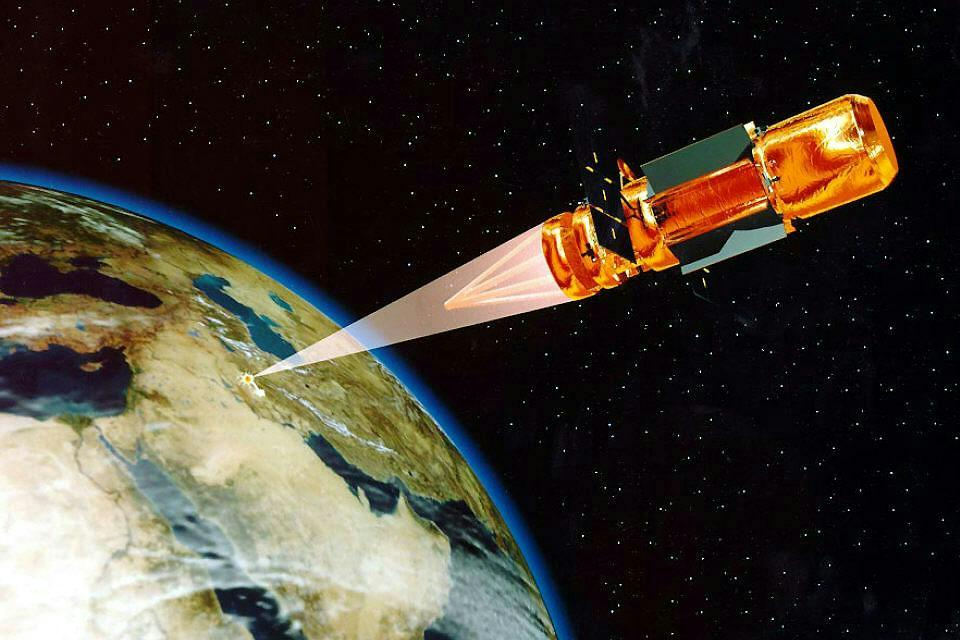
While the Outer Space Treaty has forbidden the use of space to test weapons, and in fact bans the militarization of space by any power, the changing times have caused nations to ignore such legislation to better pose themselves against their rivals.
Space has vast potential for both humanitarian and military purposes, it is only up to
us on Earth to decide which purpose we will use it for.
While the dangers of the modern space race are undeniable, its potential benefits are equally
profound. The prospect of space colonization, once the domain of science fiction, is now within
reach, and the collective euphoria that we humans have for space could have even surpassed the
spirits of the 1960’s, when Apollo 11 was poised to land the first man on the Moon.
This time however, humans are here to stay, and establishing permanent settlements on the Moon and Mars
could provide humanity with a safety net in the face of existential threats such as climate change,
nuclear war, or asteroid impacts, if we are being overly pessimistic, but it could also serve as an
obvious launch-pad for humans to eventually venture past our solar system and become a truly
interstellar species.
These colonies could also serve as hubs for scientific research and industrial activity, enabling breakthroughs in fields ranging from materials science to biotechnology.
As we are poised to explore further into the cosmos, we must confront the dual nature of our
ambitions.
Space holds unparalleled promise unlike any opportunity we have found so far as a
species, but also mirrors the conflicts that define us on Earth. The choices we make now will
shape not only the future of space exploration but the trajectory of our species.
Will space foster cooperation and innovation or become another arena for competition and exploitation? The
answer lies in our ability to balance ambition with responsibility.
The new Space Race offers both incredible promise and significant peril, but with wisdom and foresight, it may surpass its predecessor, uniting humanity in a shared endeavor to break free from Earthly confines and
explore the stars together.

 de facto
Leave a Reply
You must be logged in to post a comment.